2026 · AI automation · Our own system
Agent Agency
Agent Agency is the AI operating system that Niro Digital built for its own agency work in 2026: supervised agents run staged workflows, humans approve every publication, and every run is priced.
- Client
- Niro Digital Internal System
- Industry
- AI Automation / Agency Operations
- Year
- 2026
- What we did
- AI automation
The constraint
We are the client here. Before Agent Agency, a sourced article cost us $8.40 in model spend plus a writer's afternoon. Nothing recorded what each step cost, which model did which job, or why a draft was accepted, and nothing stood between a draft and publication except a person remembering to read it. So we built the agency its own operating system. Specialist agents run as durable, staged workflows; every stage is priced; every run pins the exact harness, prompt and model-policy versions it executed; and anything irreversible stops at a human approval bound to one content hash. It runs on Next.js and Postgres with a durable workflow runtime underneath, and the whole agency now works out of one control plane: runs, an approvals inbox, per-client workspaces, and a content library with revision lineage.
$0.37
$8.40
$5
15
*Figures from the project's own accounts and dashboards at the time of writing.
The system

- //01Dashboard: active runs, decisions waiting, seven-day model spend, live run table
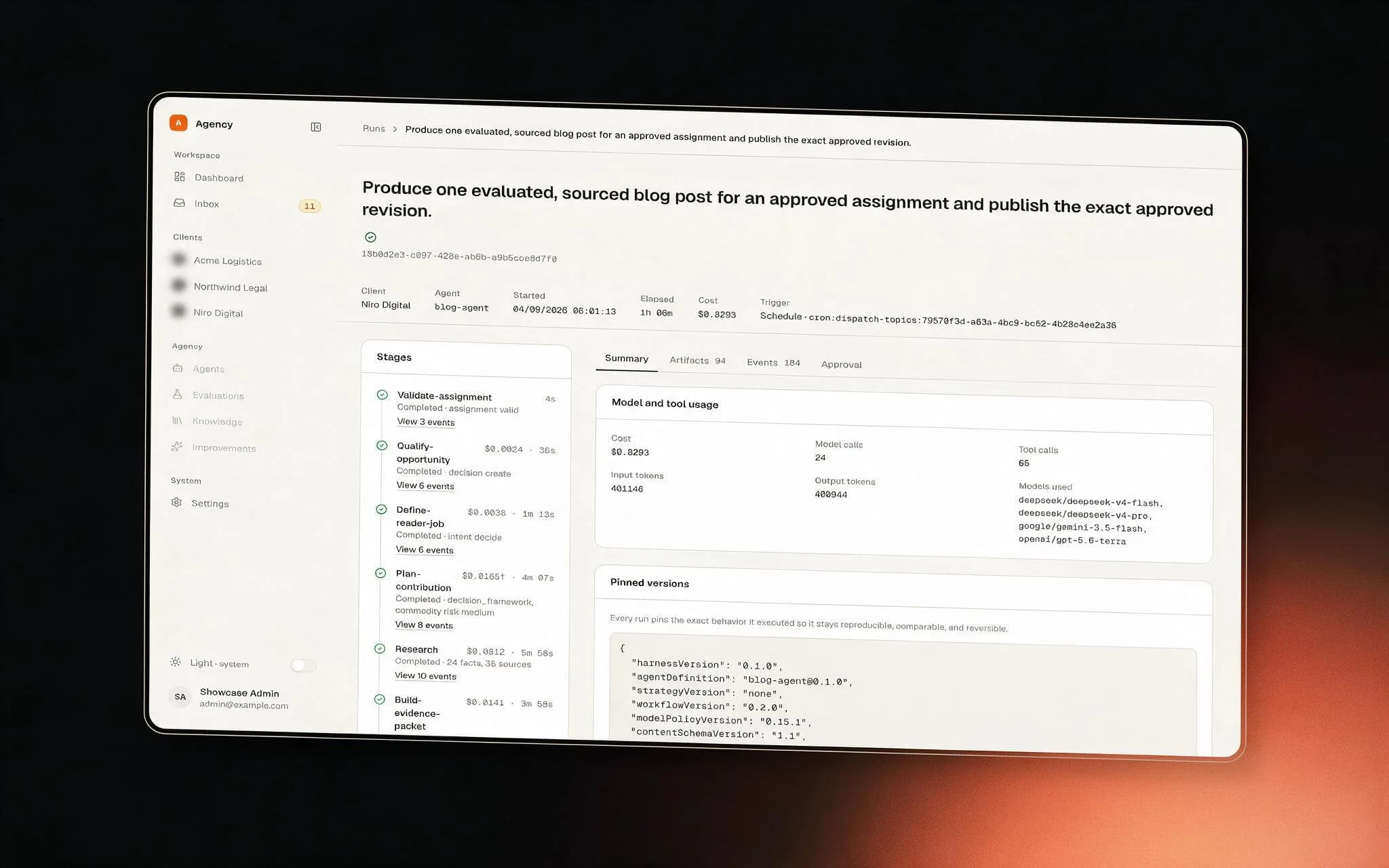
- //02Run detail: every stage priced, models used, and the versions the run pinned
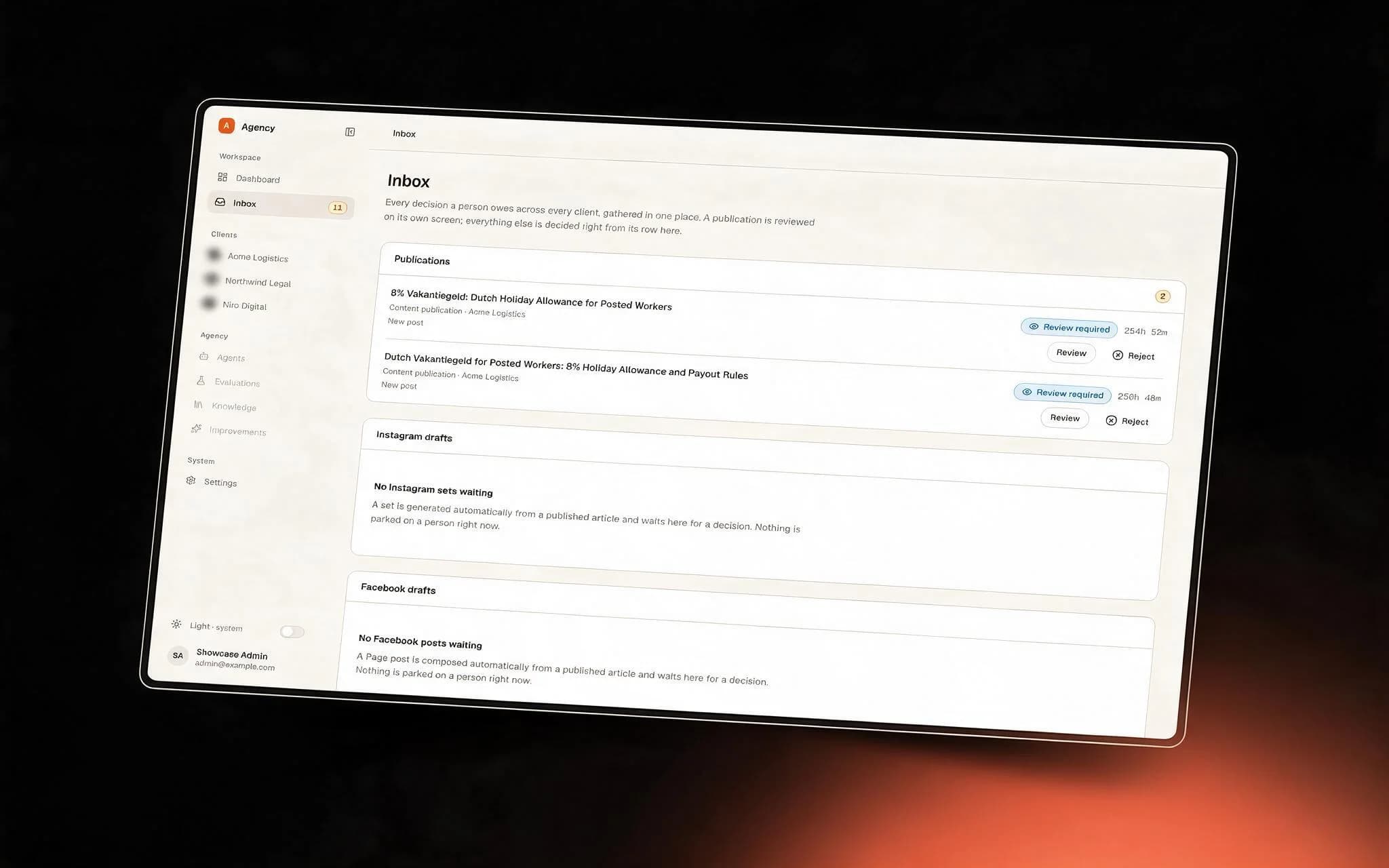
- //03One inbox for every decision a person owes, across every client
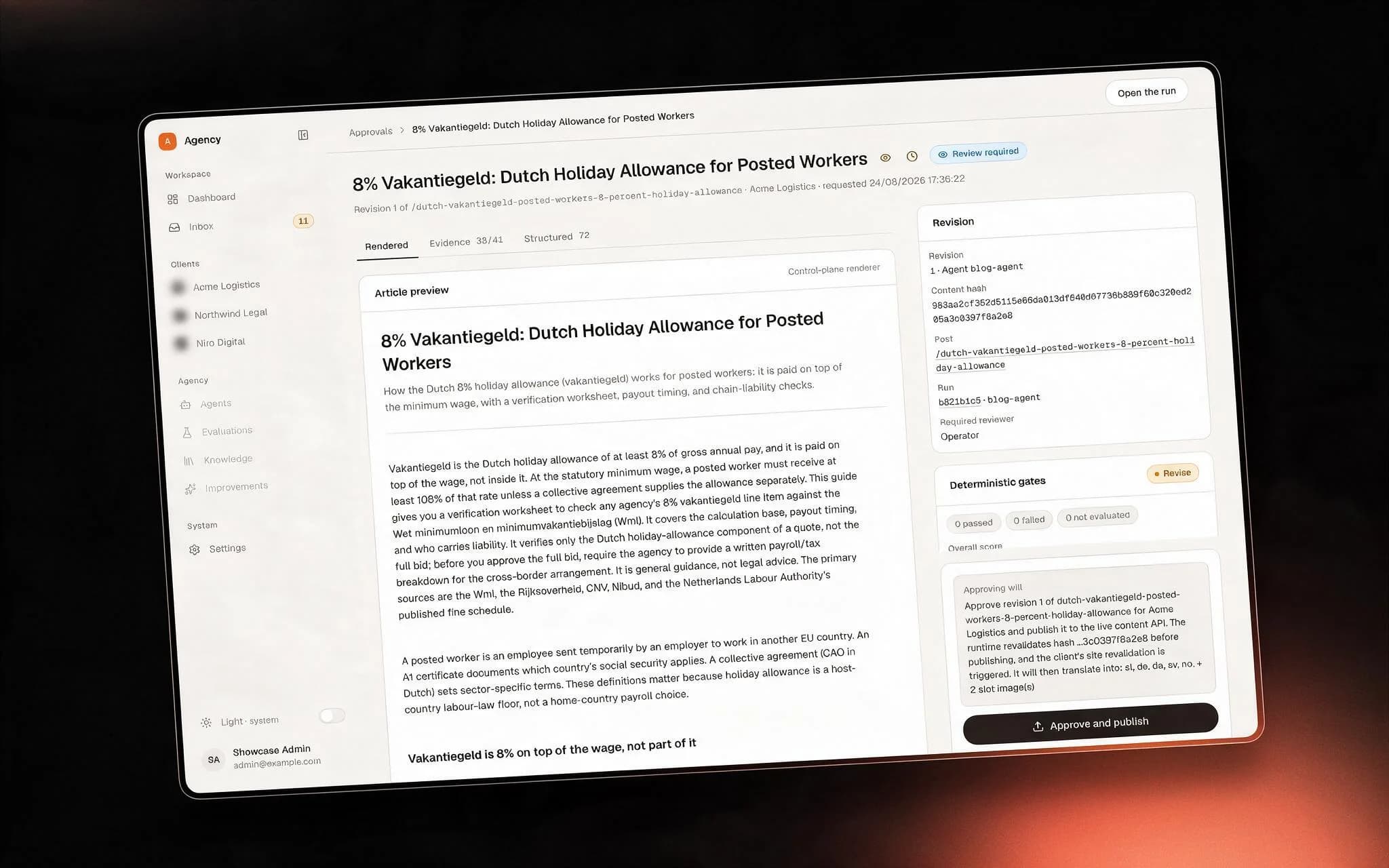
- //04Approval bound to a content hash, stating exactly what publishing will do
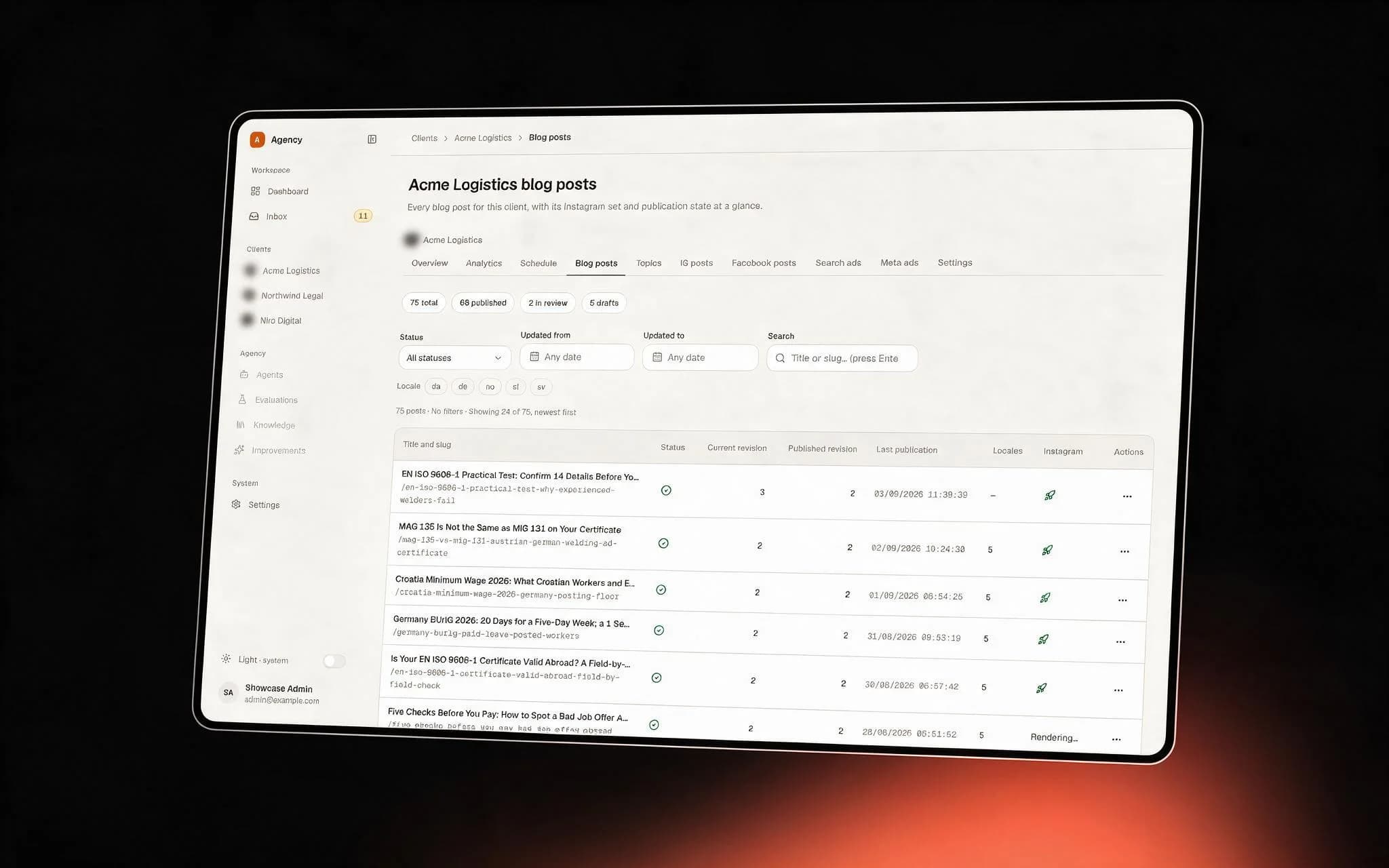
- //05A content library with current and published revision per post, per locale
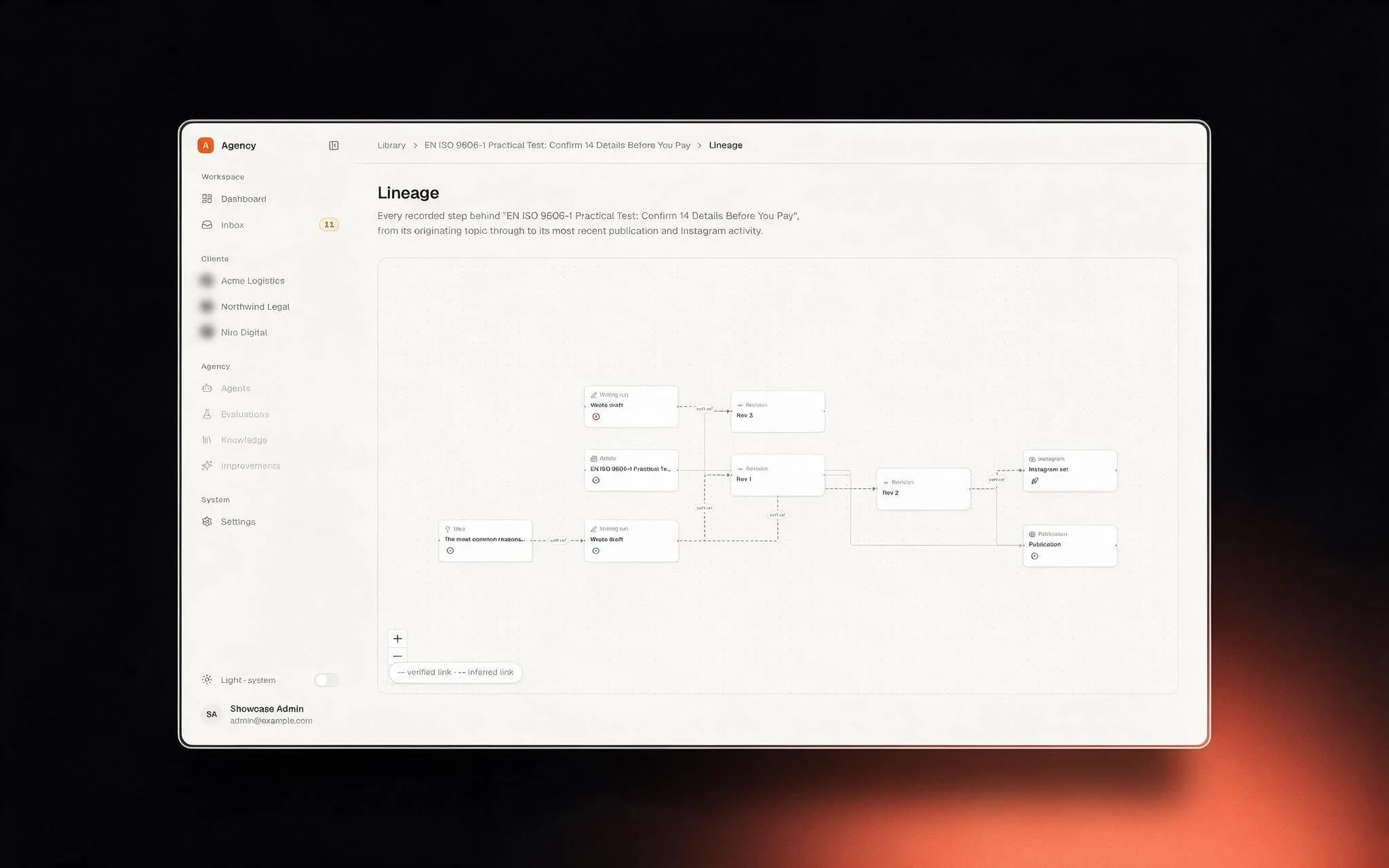
- //06A lineage graph from topic to publication, verified and inferred links marked
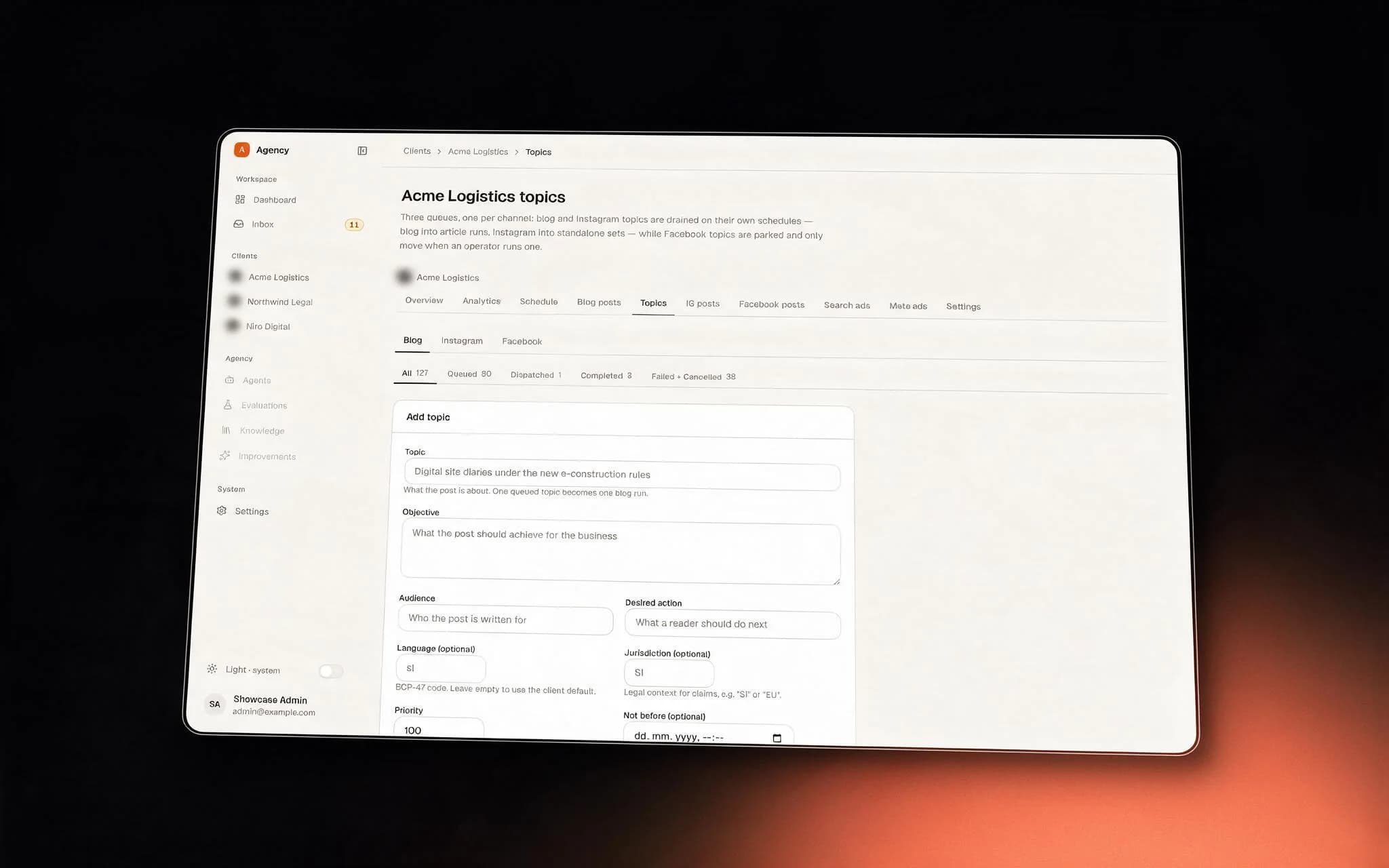
- //07Topic queues per channel, drained on a schedule into agent runs
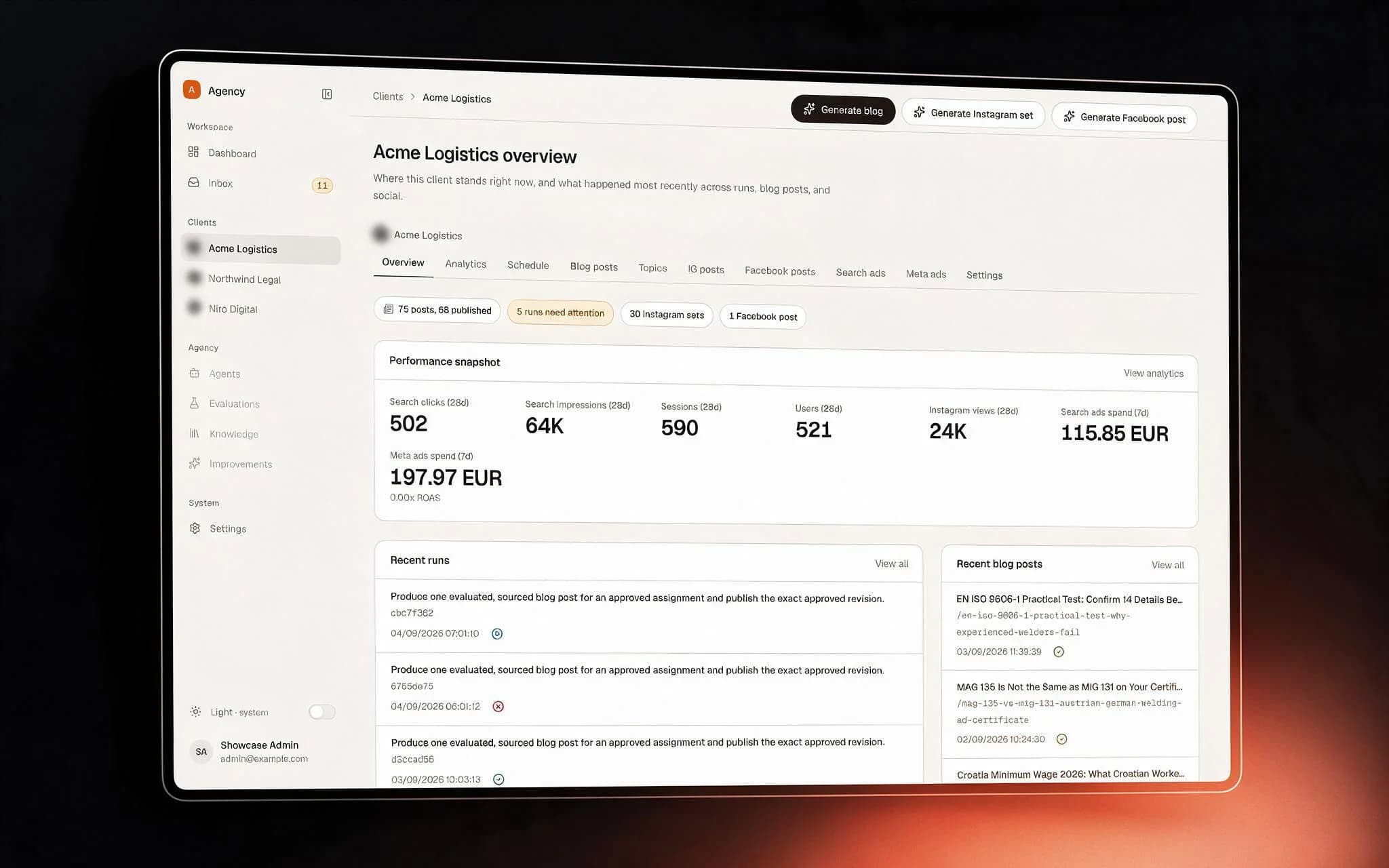
- //08Per-client workspace: performance snapshot, recent runs, one-click blog or social generation
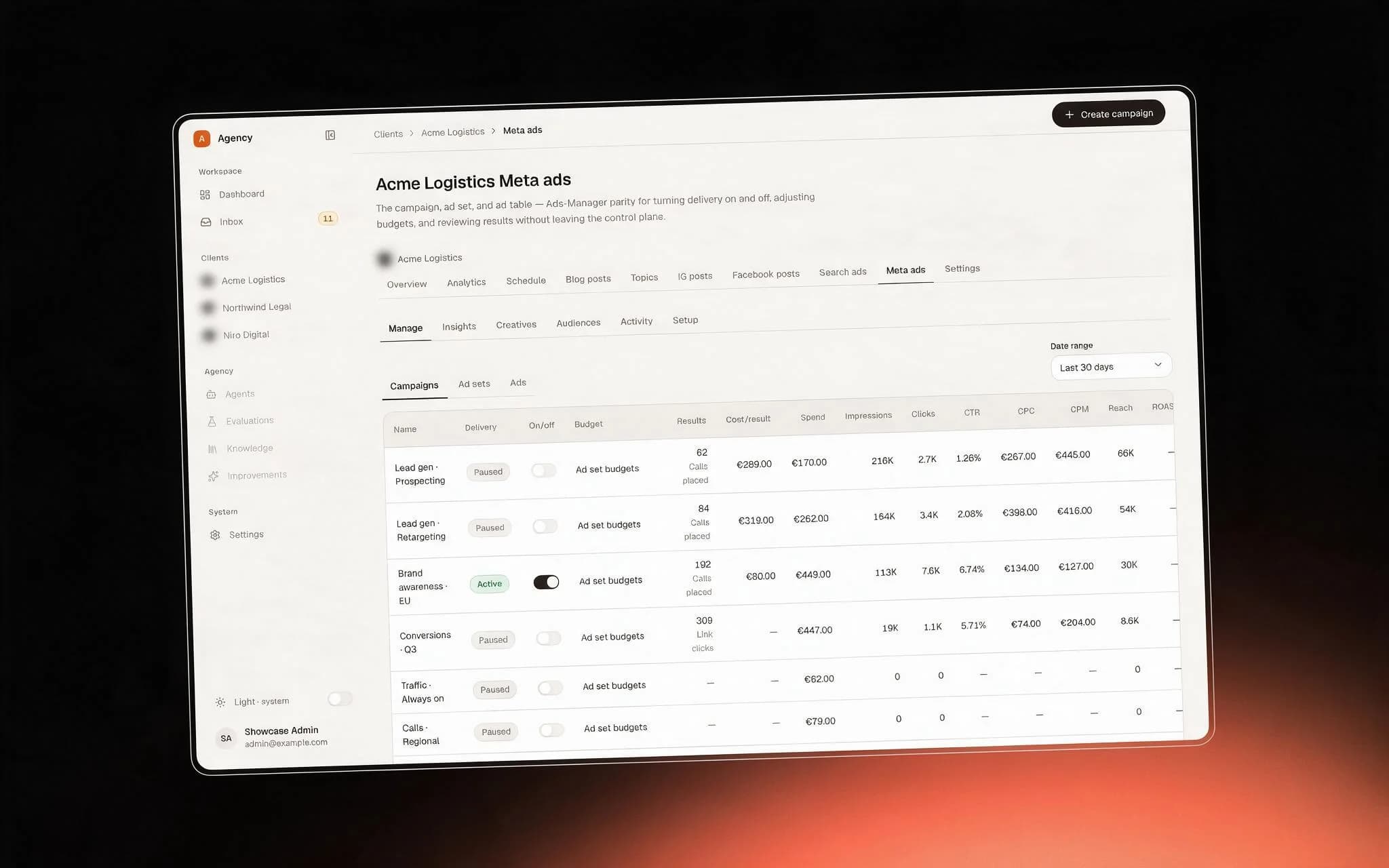
- //09A Meta Ads console: campaigns, ad sets, ads, budgets and delivery toggles
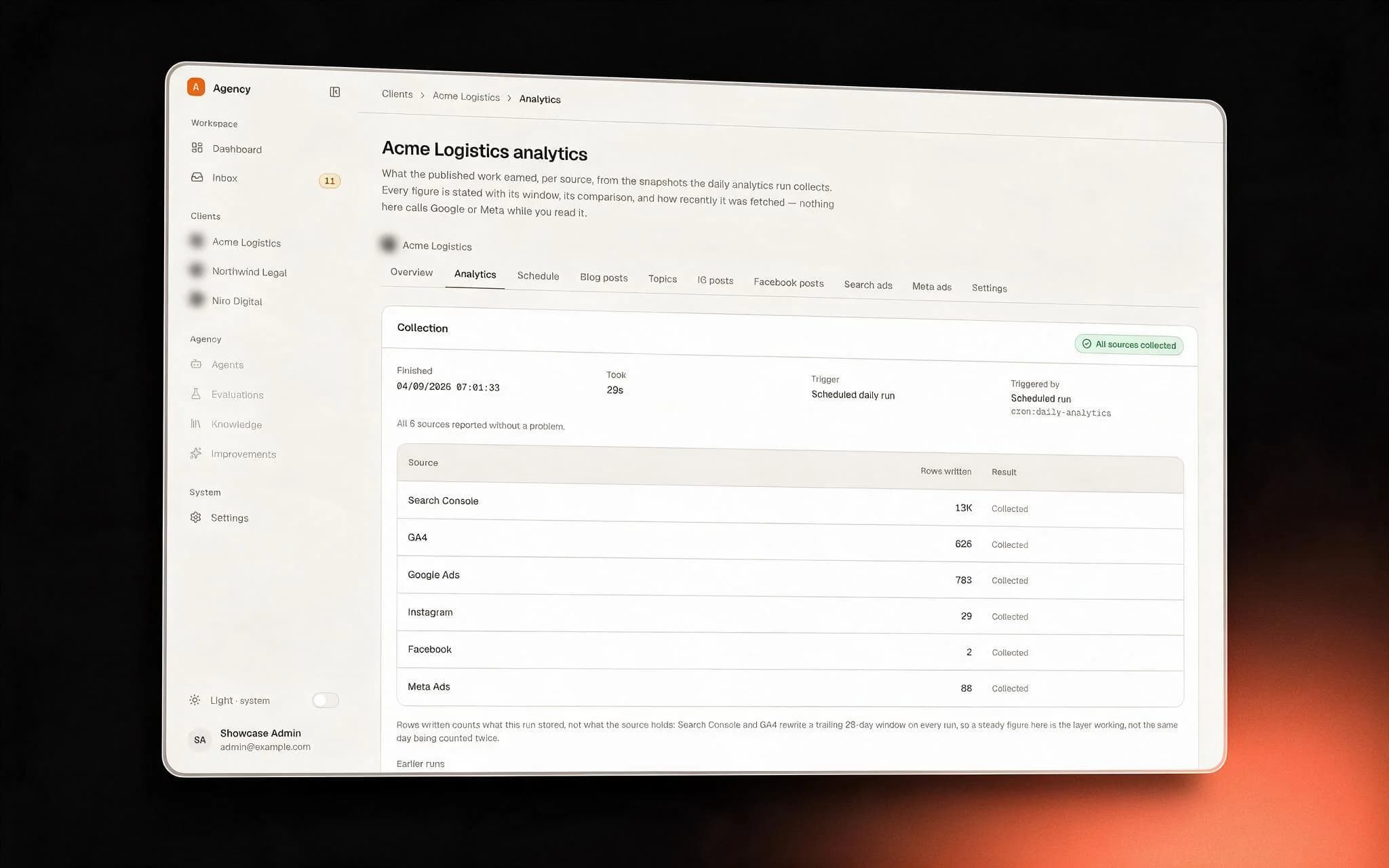
- //10Daily analytics collected from six sources, each with an auditable result
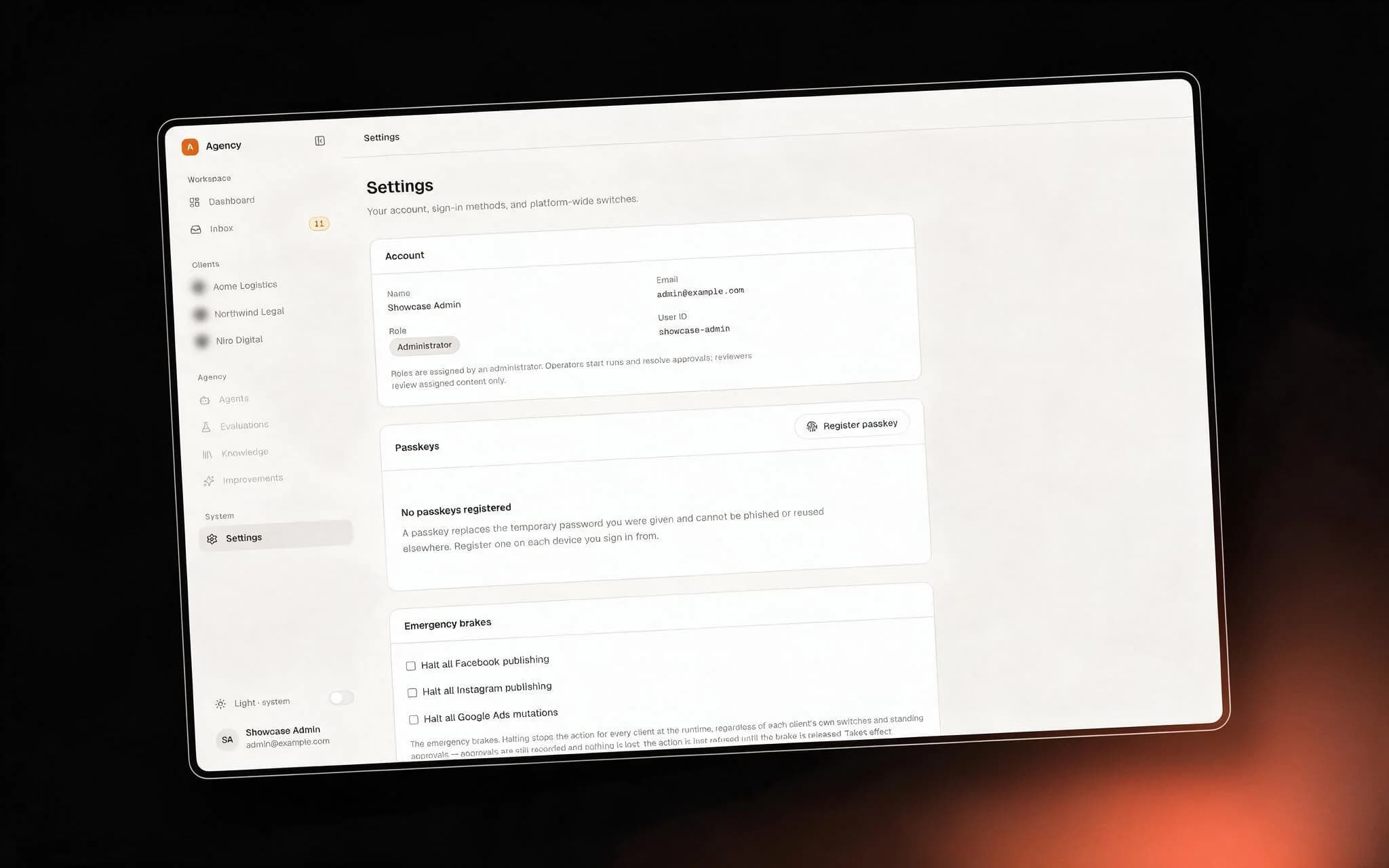
- //11Roles, passkeys, and platform-wide brakes that halt publishing everywhere at once
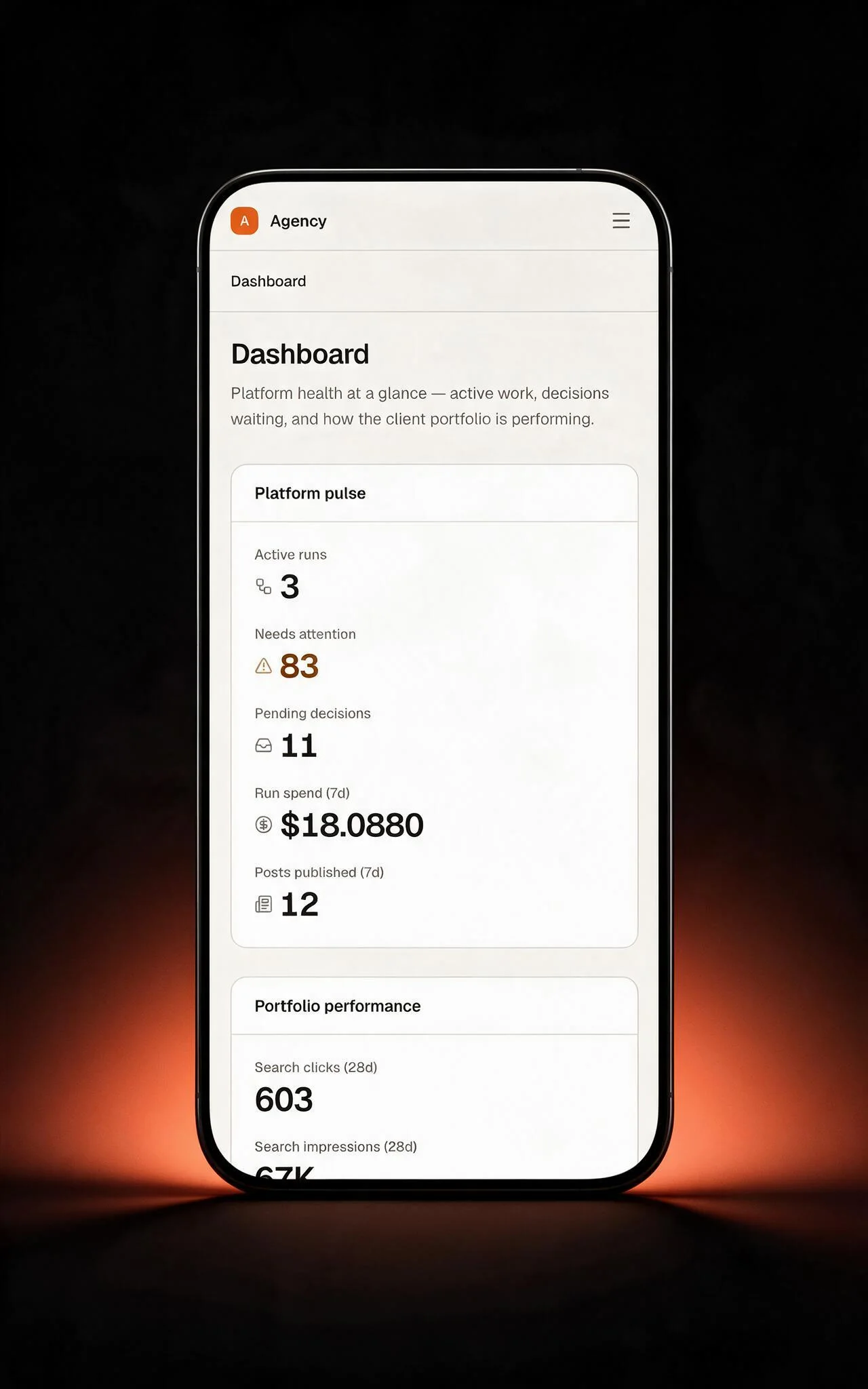
- //12The same operator view on a phone
What changed
- //01A sourced 3,046-word article costs $0.37 across 24 model calls
- //02Every run pins harness, prompt, model policy and client config versions
- //03Three posts a week cost a client about $5 a month in model spend
- //04Nothing publishes without a human approving that exact revision
What we'd do differently
Cost engineering came after the first build, not with it: the first version ran self-improvement loops and duplicate evaluator panels that cost $8.40 an article until we removed them. The human gate still rejects work: the first article to pass automated evaluation was rewritten by the editor. The figures cover one specialist, the blog-content agent. Code merges and ad budgets have their own policies but no cost figures to show.
All projects
More work in AI automation
Start here
Tell us the constraint
Operations, workers or customers. One sentence is enough, we'll reply within one working day.